

I don’t know about you, but when spring rolls around, I crave meals that are light, fresh, and—let’s be real—easy to clean up. That’s why this One-Pot Pasta Primavera with Spring Vegetables is my go-to recipe when I want something delicious without the hassle. Picture this: tender pasta, crisp asparagus, sweet peas, and juicy cherry tomatoes all simmering together in one pot, soaking up the flavors of garlic and Parmesan. No piles of dishes, no stress—just a vibrant, comforting dish ready in under 30 minutes. Trust me, once you try it, you’ll be as obsessed as I am.
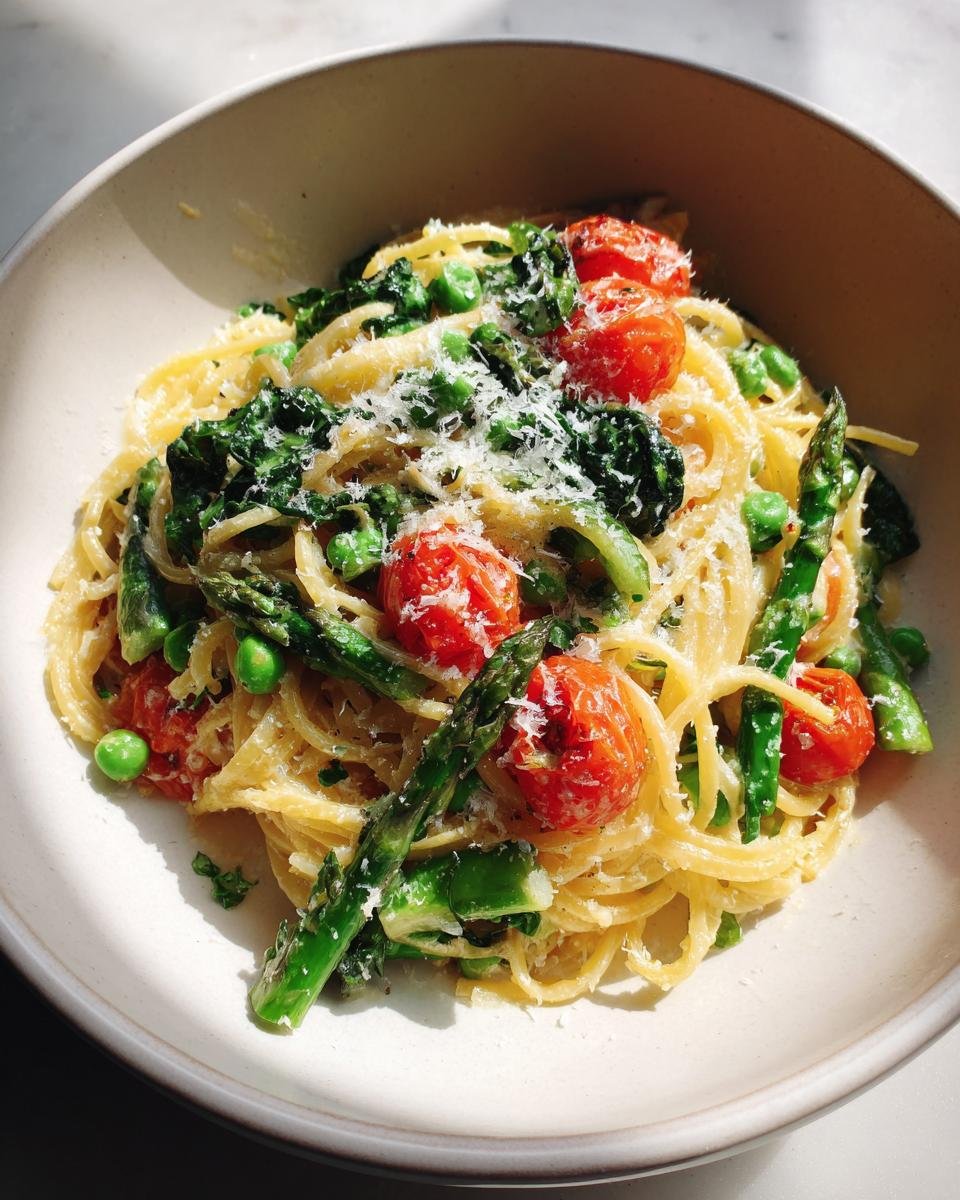
Why You’ll Love This One-Pot Pasta Primavera with Spring Vegetables
This recipe is a game-changer for busy weeknights or lazy Sundays. Here’s why you’ll adore it:
- Quick: Ready in just 25 minutes—perfect for when you’re short on time.
- Healthy: Packed with fresh spring veggies for a nutritious meal.
- Minimal cleanup: One pot means less mess and more relaxation.
- Fresh flavors: Bright, vibrant, and oh-so-satisfying—spring in every bite!
Ingredients for One-Pot Pasta Primavera with Spring Vegetables
Gathering everything before you start makes this recipe a breeze—trust me, I’ve learned the hard way! Here’s what you’ll need:
- 8 oz pasta (any shape you love—I’m partial to fusilli for catching all that creamy sauce)
- 2 tbsp olive oil (the good stuff—it adds so much flavor!)
- 1 small onion, diced (about 1 cup—don’t skip this, it’s the flavor base)
- 2 cloves garlic, minced (or 3 if you’re like me and can’t get enough)
- 1 cup cherry tomatoes, halved (they burst into little pockets of sweetness)
- 1 cup asparagus, chopped (1-inch pieces—snap off those tough ends first)
- 1 cup peas (fresh or frozen both work beautifully)
- 1 cup spinach (packed—it wilts down to nothing, so don’t be shy)
- 3 cups vegetable broth (low-sodium if you’re watching salt)
- 1/4 cup heavy cream (or half-and-half in a pinch)
- 1/2 cup grated Parmesan cheese (freshly grated melts so much better)
- 1 tsp salt (adjust to taste—I always start with less)
- 1/2 tsp black pepper (freshly cracked if you’ve got it)
See? Nothing fancy—just fresh, simple ingredients that come together like magic. Now let’s get cooking!
Equipment You’ll Need
You won’t need much—just the basics! Grab a large pot (at least 5 quarts—trust me, pasta expands), a wooden spoon for stirring, a sharp knife, and a cutting board. That’s it! No fancy gadgets required, just good old-fashioned tools.
How to Make One-Pot Pasta Primavera with Spring Vegetables
Alright, let’s get to the fun part—cooking! This recipe is so simple, but a few key steps make all the difference. Follow along, and you’ll have a creamy, veggie-packed pasta that tastes like spring in a bowl. Here’s how it’s done:
Step 1: Sauté the Aromatics
First, heat the olive oil in your large pot over medium heat—don’t rush this by cranking it up! Add the diced onion and let it cook for about 2 minutes, stirring occasionally, until it turns soft and translucent. Now, toss in the minced garlic and stir for another 30 seconds. You’ll know it’s ready when the kitchen smells incredible—just be careful not to let the garlic brown, or it’ll turn bitter.
Step 2: Add the Vegetables
Time for the stars of the show: the veggies! Throw in the asparagus, cherry tomatoes, and peas, and give everything a good stir. Cook for 3 minutes—just until the asparagus brightens and the tomatoes start to soften. If you’re using frozen peas (no shame—I do it all the time), no need to thaw them first. The spinach goes in last because it wilts so quickly—just a quick stir until it’s barely limp.
Step 3: Cook the Pasta
Now, add the dry pasta and vegetable broth all at once. Bring it to a rolling boil, then reduce the heat to a simmer. Let it cook for 10–12 minutes, stirring every few minutes to prevent sticking. The pasta should be al dente—tender but with a little bite. And don’t worry if it looks soupy at first; the pasta will soak up most of that liquid as it cooks.
Step 4: Finish with Cream and Cheese
Almost there! Stir in the heavy cream, Parmesan, salt, and pepper, and let it all simmer together for 2 more minutes. This is when the magic happens—the sauce thickens, the flavors meld, and suddenly, your kitchen smells like an Italian bistro. Taste and adjust the seasoning if needed (I usually add an extra sprinkle of Parmesan because, well, cheese). And that’s it—dinner’s ready!
Tips for Perfect One-Pot Pasta Primavera with Spring Vegetables
Want to make sure your pasta primavera turns out flawless every time? Here are my tried-and-true tricks:
- Don’t skimp on the broth: It’s the secret to rich flavor—homemade or good-quality store-bought makes all the difference.
- Keep veggies crisp-tender: They should still have a bit of bite when you add the pasta—they’ll soften more as everything cooks.
- Stir, but not too much: Just enough to prevent sticking, but too much will break down those beautiful veggies.
- Taste before serving: Pasta absorbs salt differently—adjust seasoning at the end for perfect balance.
Follow these, and you’ll have pasta primavera that’s restaurant-worthy with none of the fuss!
Variations for One-Pot Pasta Primavera with Spring Vegetables
This recipe is super flexible—swap in whatever veggies you’ve got on hand! Try zucchini, bell peppers, or broccoli for a different twist. For a vegan version, skip the cream and cheese, and use a splash of coconut milk or cashew cream instead. You can even swap the pasta for zucchini noodles or chickpea pasta for a low-carb option. The possibilities are endless—make it your own!
Serving Suggestions
This pasta primavera pairs perfectly with a slice of warm garlic bread or a crisp green salad. A glass of chilled white wine? Now that’s the ultimate springtime meal!
Storage & Reheating
Got leftovers? No problem! Store your pasta in an airtight container in the fridge for up to 3 days. To reheat, just pop it in a pan with a splash of broth or water over medium heat, stirring until warmed through. It’s just as good the second time around!
Nutritional Information
Now, I’m no nutritionist—just a home cook who loves good food—but I can tell you this pasta primavera packs a wholesome punch! Loaded with fresh veggies and balanced with whole grains (hello, pasta!), it’s a meal that’ll leave you satisfied without weighing you down. The olive oil and Parmesan add healthy fats, while the spinach and asparagus bring vitamins to the table.
Keep in mind, though, that nutrition can vary based on the specific ingredients and brands you use. Swap in whole wheat pasta? That’ll bump up the fiber. Skip the cream? You’re cutting back on fat. Cooking is all about making it work for you!
The beauty of this dish is how adaptable it is—whether you’re watching calories, going plant-based, or just craving something fresh and delicious. My philosophy? Enjoy good food, savor every bite, and listen to what your body needs. After all, that’s what home cooking’s all about!
Frequently Asked Questions
I’ve gotten so many questions about this one-pot wonder over the years—here are the ones that pop up most often! If you’ve got a question I didn’t cover, shout it out in the comments.
Can I use frozen vegetables instead of fresh?
Absolutely! Frozen peas and asparagus work like a charm here—no need to thaw them first. Just toss them in straight from the freezer. The only exception? I’d avoid frozen spinach unless you squeeze out ALL the water first—otherwise, you’ll end up with a soggy mess.
How can I make this pasta primavera vegan?
Easy peasy! Skip the cream and Parmesan, and use coconut milk or cashew cream for richness. Nutritional yeast adds a cheesy flavor without dairy. And make sure your pasta doesn’t contain eggs—most dried pastas don’t, but it’s always good to check. For more vegan dessert ideas, check out our other recipes.
What if my pasta turns out too dry or too soupy?
Don’t panic! If it’s too thick, stir in a splash of warm broth or water until it loosens up. Too thin? Let it simmer uncovered for another minute or two—the pasta will soak up that extra liquid like a sponge.
Can I use chicken broth instead of vegetable broth?
Of course! The flavor will be slightly richer, but just as delicious. I’ve even used a mix of water and bouillon in a pinch when I ran out of broth. Cooking’s all about improvising!
How do I prevent the pasta from sticking together?
The trick is stirring occasionally during the simmering step—but not too much! Every 2-3 minutes is perfect. And make sure you’re using a pot big enough so everything has room to move around.
There you have it—all my pasta primavera secrets! Now it’s your turn: try this recipe and let me know how it turns out. Did you add any fun twists? Which veggies did your family love? Drop me a comment—I read every one!
Print
Creamy One-Pot Pasta Primavera Ready in 25 Minutes
A quick and easy one-pot pasta dish loaded with fresh spring vegetables. Perfect for a light and healthy meal.
- Total Time: 25 mins
- Yield: 4 servings 1x
Ingredients
- 8 oz pasta
- 2 tbsp olive oil
- 1 small onion, diced
- 2 cloves garlic, minced
- 1 cup cherry tomatoes, halved
- 1 cup asparagus, chopped
- 1 cup peas
- 1 cup spinach
- 3 cups vegetable broth
- 1/4 cup heavy cream
- 1/2 cup grated Parmesan cheese
- 1 tsp salt
- 1/2 tsp black pepper
Instructions
- Heat olive oil in a large pot over medium heat.
- Add onion and garlic. Cook for 2 minutes until softened.
- Stir in cherry tomatoes, asparagus, peas, and spinach. Cook for 3 minutes.
- Add pasta and vegetable broth. Bring to a boil.
- Reduce heat and simmer for 10-12 minutes, stirring occasionally.
- Stir in heavy cream, Parmesan, salt, and pepper. Cook for 2 more minutes.
- Serve hot.
Notes
- Use any pasta shape you prefer.
- Substitute any seasonal vegetables as desired.
- For a vegan version, skip the cream and cheese.
- Prep Time: 10 mins
- Cook Time: 15 mins
- Category: Main Course
- Method: One-Pot
- Cuisine: Italian
- Diet: Vegetarian
Nutrition
- Serving Size: 1 serving
- Calories: 380
- Sugar: 5g
- Sodium: 800mg
- Fat: 12g
- Saturated Fat: 4g
- Unsaturated Fat: 7g
- Trans Fat: 0g
- Carbohydrates: 55g
- Fiber: 6g
- Protein: 14g
- Cholesterol: 15mg
Keywords: pasta primavera, one-pot pasta, spring vegetables, easy pasta recipe